User Guide
Overview

GraspKit is an end-to-end toolkit for manipulation across various robot embodiments, including grippers and dexterous hands. It synthesizes grasps, plans trajectories, trains policies, and deploys them in simulation or on real robots; it is built on top of RoboKit.
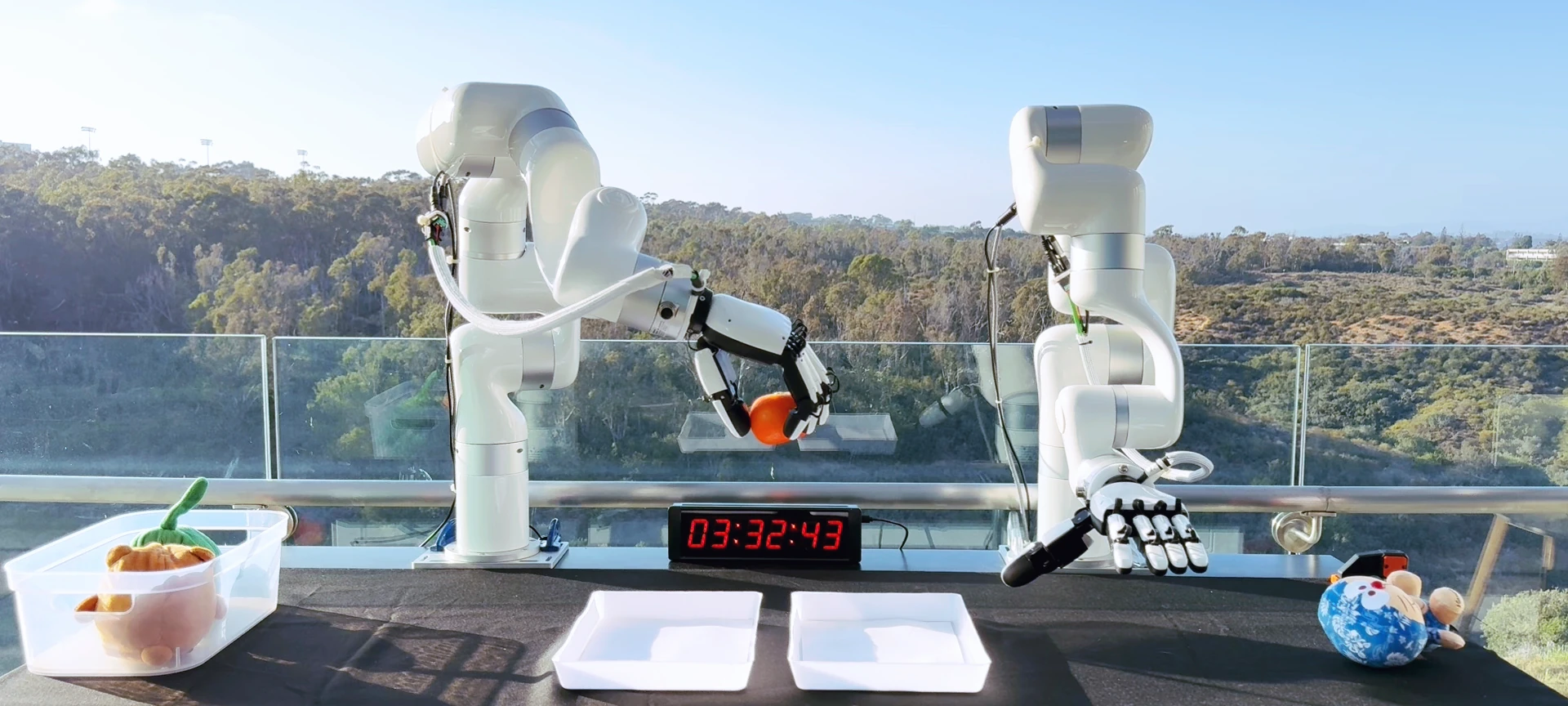
Real-world grasping with dexterous robot hands in San Diego.
Key features
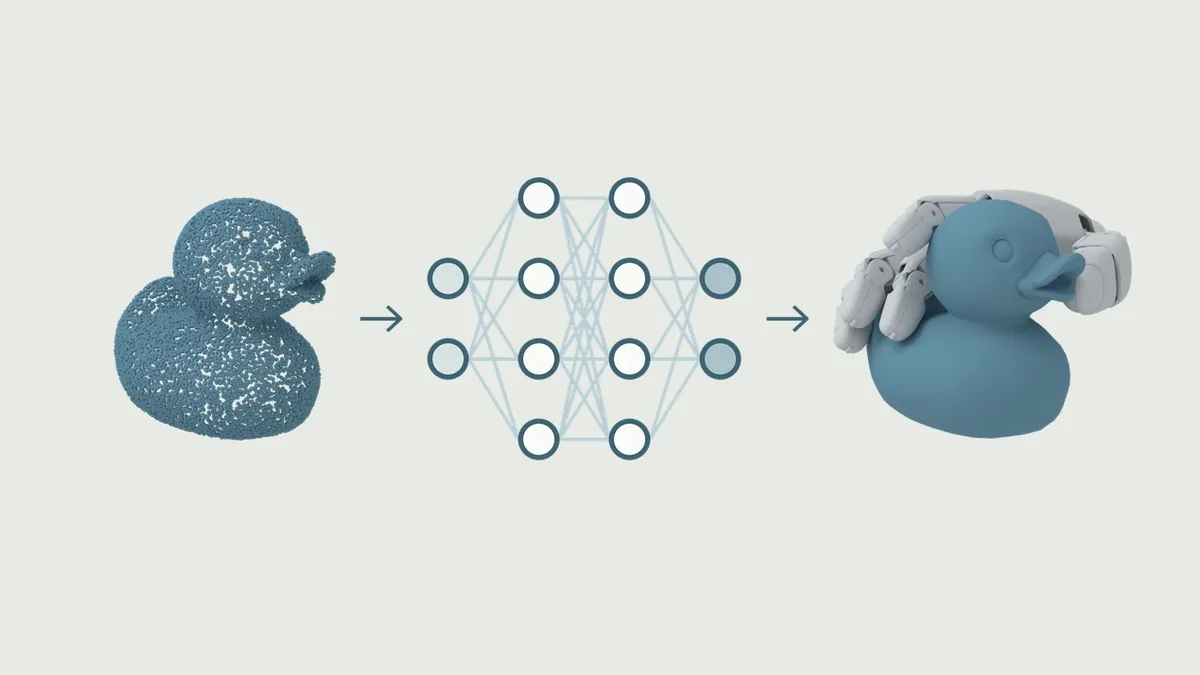
- Fast grasp optimization. GPU optimizers refine thousands of grasp seeds per batch against cached scene geometry. See Grasp optimization.
- Performant policy training. Train grasp policies on processed point clouds and successful trajectories, with multi-GPU support. See Training.
- Across embodiments. Use grippers and dexterous hands in arm, hand, and humanoid configurations. See the robot catalog.
- Simulation validation. Filter and motion-plan grasps, then test them in physics simulation. See Simulation deployment.
- Real-world validation. Run trained policies on xArm and Vega robots with calibrated cameras and collision-checked motions. See Real deployment.
 |  |
|---|---|
| Fast grasp optimization | Performant policy training |
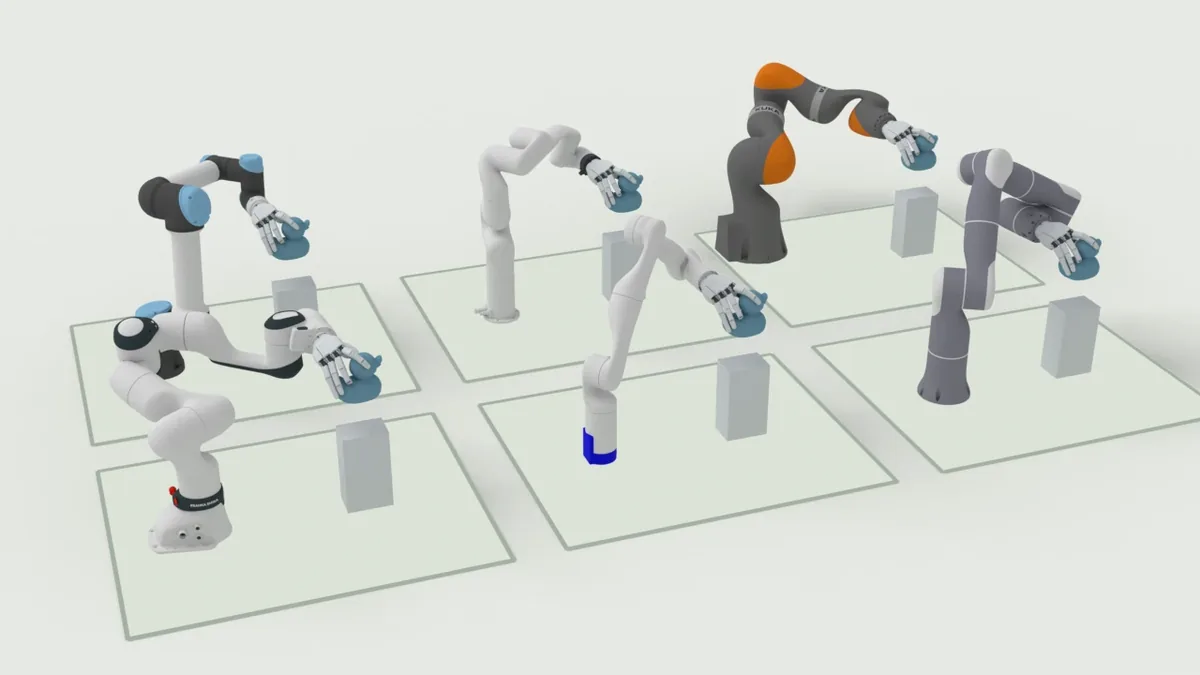 | 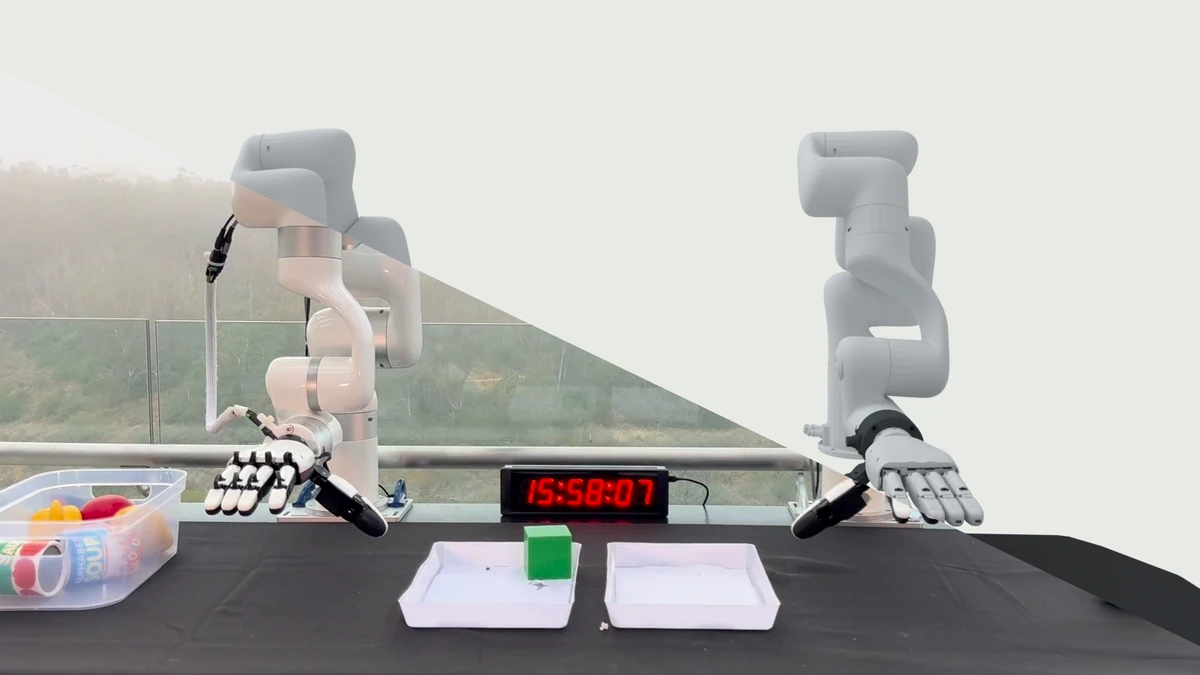 |
| All arms, all hands | Real-world robustness |
How it works
| Stage | Role | Read more |
|---|---|---|
| Scene descriptions | Objects, scales and poses on a table, as msgpack. | Scene descriptions |
| Grasp optimization | Energy minimization to grasp poses, then filters, motion planning and sim validation. | Grasp optimization |
| Rendering | Point-cloud observations of the same scenes, from calibrated cameras. | Pipeline |
| Training | A CVAE policy that maps an object point cloud to pre-grasp, grasp and post-grasp poses. | Training |
| Deployment | Policy inference plus trajectory building, in sim or on hardware. | Sim, real |
For the graph of stages and the artifacts between them, see Core overview.